

At Rubio Dental Group, we see hundreds of patients every month who arrive with the same question:
“How do I know if this is a cavity?”
It’s a fair question—and one that often comes too late. Cavities don’t always look like the dramatic dark holes people expect. In reality, decay is sneaky. It starts quietly, hides well, and often progresses long before pain ever shows up.
This guide explains how cavities look at every stage, what they feel like, how long you can leave them untreated, and how our dentists treat them. If you’re unsure about something you see in the mirror, this page will help you understand what’s going on—and what to do next.
What Do Cavities Look Like? (A Visual Breakdown from Early to Advanced)
Cavities change appearance as they grow. Understanding these stages helps you identify problems early—when treatment is simpler, faster, and more affordable.
Stage 1: Early Demineralization (White Spots)
This is where everything begins.
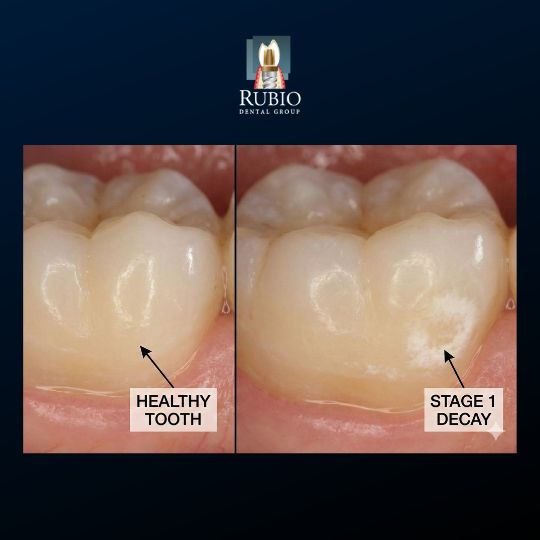
Early cavities look like:
- Chalky white patches
- Slightly opaque spots
- Areas that stand out under bright light
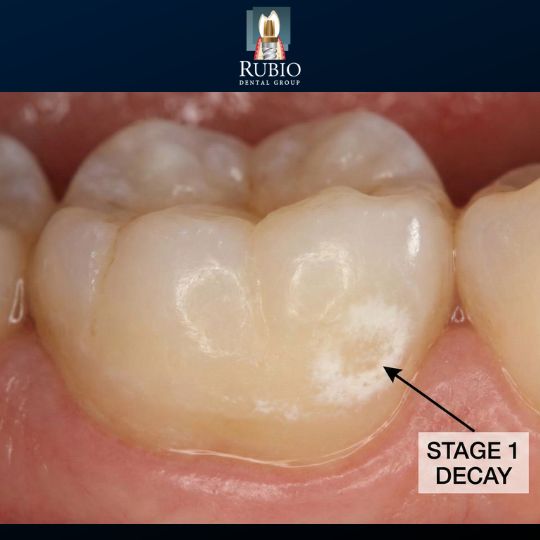
Patients rarely notice these on their own. But our dentists spot them quickly during preventive exams.
Why this stage matters:
- It’s the only stage that can still be reversed
- No drilling
- No injections
- No structural damage yet
With fluoride, improved brushing, and lower sugar intake, we can often stop decay right here.
Stage 2: Enamel Breakdown (Light Brown or Yellow Areas)
As the enamel continues to lose minerals, the cavity becomes more visible.
At this stage cavities may look like:
- Light brown stains
- Yellowish areas
- Rough patches you can feel with your tongue
This stage usually requires a small filling. The good news is that it’s quick and painless when treated early.
Stage 3: Dentin-Level Decay (Visible Holes or Dark Spots)
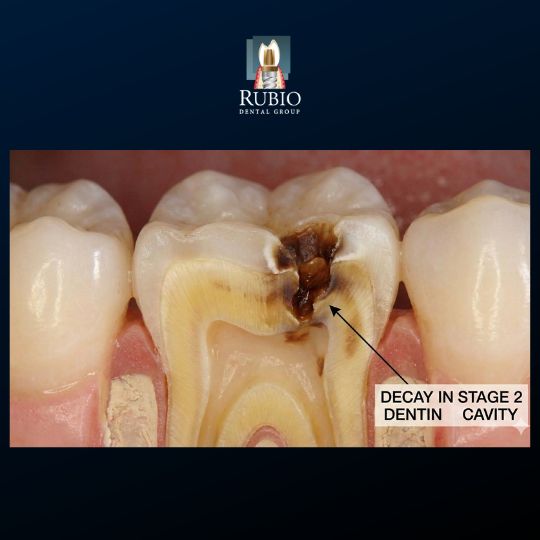
When decay reaches the dentin—the softer layer under the enamel—the appearance becomes harder to ignore.
Signs include:
- A visible hole
- Black or dark brown spots
- A pit that traps food
- A surface that feels sunken or uneven
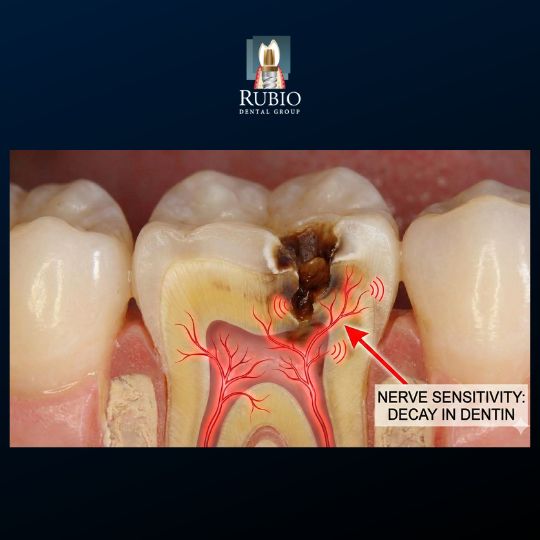
Pain often begins here, but not always.
At Rubio Dental Group, fillings at this stage are still straightforward, but they must be done soon to avoid nerve damage.
Stage 4: Deep Decay (Structural Collapse)
This is when a cavity becomes what most people imagine:
- A large visible hole
- Crumbling enamel edges
- Dark or black coloration
- Sensitivity or sharp pain
- Possible swelling of nearby gums
Once decay reaches the pulp (nerve), patients may experience constant, throbbing pain.
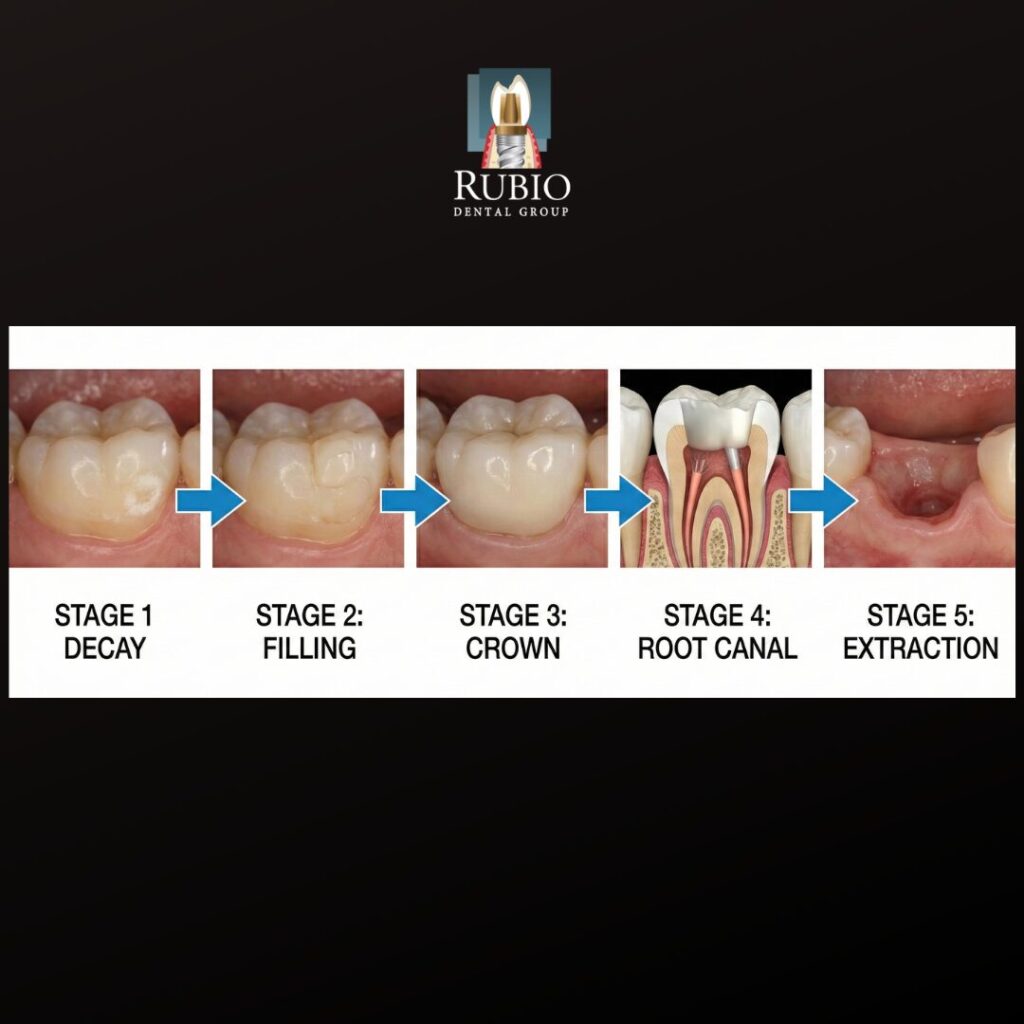
At this stage, treatment often requires:
- A crown
- A root canal
- Or, in severe cases, extraction
But even then, most teeth can still be saved if treated promptly.
What Does a Cavity Feel Like? (Symptoms Even You Can Recognize)
Many patients feel cavities before they see them. If you’re unsure what cavities feel like, here are the sensations to watch for:
Sensitivity
A quick sting when eating something:
- Cold
- Hot
- Sweet
- Sour
This is often the first sign that decay has moved past the enamel.
Sharp Pain When Biting
If pressure on a specific tooth causes a sudden jolt, decay may be deeper than it looks.
Intermittent or Constant Ache
A dull, throbbing ache can mean decay is approaching the nerve.
“If a Cavity Hurts, Is It Too Late?”
Not at all—but it is a sign that you need treatment now.
Pain means the decay has moved into dentin or pulp. You may not qualify for a simple fluoride reversal anymore, but fillings, crowns, and root canals are all reliable ways to save the tooth.
How Do I Know If I Have Cavities? (Self-Check Symptoms)
If you’re wondering whether you have a cavity, check for these signs:
- Sensitivity to hot/cold
- Pain when biting
- Visible holes or pits
- Black, brown, or white spots
- Food constantly getting stuck in the same area
- Bad breath or bad taste
- Tooth chipping or fractures
- Changes in the shape of the tooth
Any of these signs warrant a dental evaluation.
How Long Can a Cavity Go Untreated?
There’s no fixed timeline, but decay generally progresses faster than patients expect.
Without treatment:
- Months = enamel loss
- More months = dentin damage
- Even more = nerve infection
- Final phase = fracture or loss of the tooth
The longer you wait, the more complex the solution becomes. This is why early diagnosis at Rubio Dental Group matters.
Are Cavities Contagious?
Surprisingly, yes and no.
You can’t catch a “hole,” but you can acquire the bacteria that cause cavities (Streptococcus mutans) through saliva:
- Sharing utensils
- Using someone else’s toothbrush
- Kissing
- Tasting your child’s food with the same spoon
Once these bacteria colonize your mouth, your risk increases.
How Do Dentists Fix Cavities? (Rubio Dental Group Treatment Approach)
At Rubio Dental Group, our treatments are minimally invasive, patient-centered, and designed to preserve as much natural tooth structure as possible.
Fluoride and Remineralization
Ideal for early white-spot lesions.
Tooth-Colored Fillings
We remove decay and restore the tooth with durable, natural-looking resin.
Crowns
Used when a cavity has weakened a tooth and a filling won’t provide long-term stability.
Root Canal Therapy
Recommended when decay reaches the pulp.
This treatment relieves pain and saves the tooth.
Extractions (Only When Necessary)
Reserved for cases where the tooth is too damaged to restore.
How to Prevent Cavities (Reliable, Simple Steps)
Our doctors recommend:
- Brushing twice a day
- Using fluoride toothpaste
- Daily flossing
- Limiting sugary drinks/snacks
- Using antibacterial mouthwash
- Scheduling regular cleanings
- Asking about sealants for children or cavity-prone adults
Prevention is a partnership—your daily habits plus our professional care.
Did You Know? (Who Does What in Dentistry)
At Rubio Dental Group, a team of specialists works together for your smile:
- General Dentists: Exams, fillings, cleanings
- Endodontists: Root canals and nerve care
- Periodontists: Gum treatments
- Orthodontists: Alignment and bite correction
- Oral Surgeons: Surgical extractions
- Pediatric Dentists: Children’s dental care
Whatever your case requires, you’re covered.
FAQ
How do I know it’s a cavity?
Look for sensitivity, discoloration, food trapping, or pain when chewing. Early cavities look like white spots; advanced ones look like holes.
What do early cavities look like?
Chalky white areas where enamel has lost minerals. They are subtle but significant.
Can cavities go away on their own?
Only in the earliest stage. Once enamel breaks, professional treatment is required.
What does a stage 2 cavity look like?
Usually a hole or dark spot that extends into dentin. It requires a filling as soon as possible.
If a cavity hurts, is it too late?
Not at all—but it is urgent. Pain means you need treatment to avoid deeper infection.
Are cavities contagious?
The bacteria that cause cavities can be shared through saliva. The cavity itself cannot.
Need an Evaluation?
If you suspect a cavity—or you’re simply unsure—our team at Rubio Dental Group is here to help.
Early detection means easier treatments, less discomfort, and better long-term outcomes.
